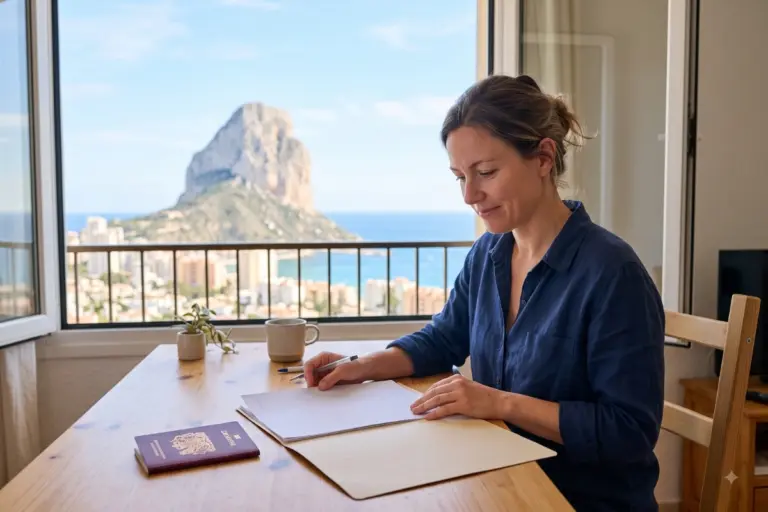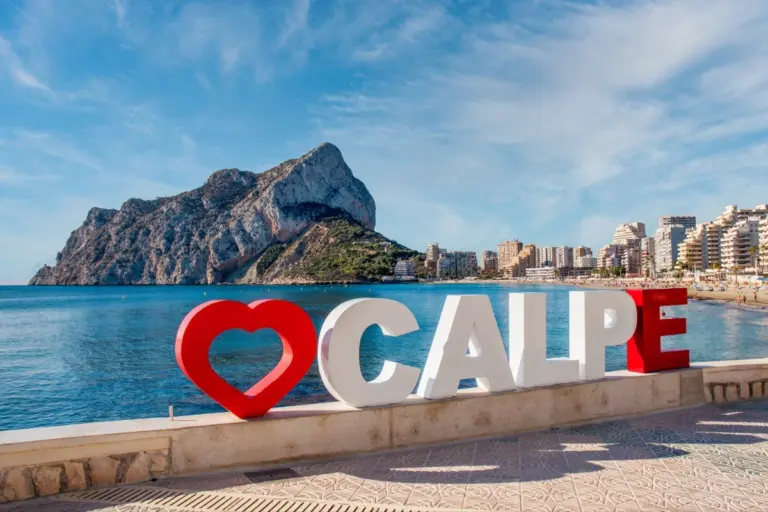
Moving to Calpe often begins with one simple thought: I could see myself living here. It might happen over coffee in the old town, during a walk beside Arenal-Bol or while looking across at the Peñón, and once that thought arrives, it tends to stick around. The idea usually gets there long before the practical questions do.
I understand the attraction completely, and I’m glad you’re feeling it. Calpe can offer a genuinely good life, but moving here successfully takes a bit more than finding a property and booking a one way flight.
This guide is built around the questions worth answering before you pack, the useful kind, not the box-ticking kind. Some are obvious. Others are the sort of things newcomers often only discover after they’ve moved, when changing their plans becomes a lot harder.
Calpe Has to Work on an Ordinary Tuesday, Not Just a Holiday
A holiday makes Calpe look easy, and it is. That’s rather the point of a holiday. You walk to the beach, eat beside the promenade and decide where to have a drink that evening. None of that tells you what living here will actually feel like once work, school runs, shopping and appointments take over.

Moving to Calpe means judging the town by its ordinary days. Can you reach the supermarket without planning the journey? Is the school run manageable? Can you get to the health centre, collect a parcel or meet somebody for coffee?
Calpe remains an active town throughout winter, but its atmosphere changes. The town centre continues with normal local life, while the beachfront become noticeably quieter. Some seasonal restaurants and businesses reduce their hours or close until the busier months return.
Summer creates the opposite problem. Streets fill, parking becomes harder and journeys that are easy in February can become frustrating in August. Apartments near busy roads, bars or fiesta routes may also be much louder than they seemed during a quiet viewing.
Never move here based only on a week spent in May or September. Those are two of the easiest months in which to love Calpe, and I’ve watched people fall for the town in exactly that window and struggle badly a year later. If possible, spend time here during both winter and the height of summer before making the decision.
The real test isn’t whether Calpe gives you a good holiday. It’s whether the town still works for you on an ordinary Tuesday, when you have errands to run, appointments to keep and dinner to make.
Your Address Decides How Much You Need a Car
Calpe can be an easy place to live without a car, but only if you choose the right address. Two homes can both be advertised as being in Calpe while giving you completely different daily lives, so this is worth getting right from the start.
The town centre, the old town, Arenal-Bol and La Fossa are mostly apartment or townhouse living, and that’s exactly why they work without a car. In the town centre, supermarkets, cafés, pharmacies and most everyday services are within walking distance. Arenal-Bol beach is close enough to reach on foot too, making the centre the most practical choice if you can’t drive or don’t want to use a car every day.
The old town is also central, though its slopes and steps are worth thinking about. A charming street can feel less convenient when you’re carrying shopping, pushing a pram or have limited mobility. Parking close to your home will also be difficult.
La Fossa works well if you want the beach, promenade, restaurants and supermarkets nearby. It sits apart from the main town centre, though. Walking from La Fossa to Arenal-Bol takes roughly 30 minutes each way, depending on where you start. That is manageable for a day out, but less convenient when you have an appointment, shopping to carry or several jobs to get done.
Maryvilla and many of the outer urbanisations are a different proposition entirely, mostly villas rather than apartments, and they do need a car. You may get a larger home, more privacy and excellent views, but the steep roads and distance from shops make a car a necessity rather than a convenience. A property that looks close to town on a map can involve a long uphill walk home, one you won’t want to make with the shopping.
Calpe has local buses, but don’t choose a home assuming the bus will cover the journey. Calp’s tram station is useful for travelling towards Benidorm or Dénia, though it’s away from the centre and won’t help with trips around town.
If you have a car, check where you’ll park it before signing anything. Street spaces become much harder to find during summer in town, and some older apartment buildings don’t include private parking. A garage may prove more valuable than an extra terrace or slightly better view.
Anyone moving to Calpe without a driving licence should accept a smaller or less scenic apartment to remain central. A sea view is lovely, but being able to buy food, meet friends and reach an appointment without arranging transport will improve your life far more often.
Rent First if You’re Still Learning the Areas
If you’ve only visited Calpe on holiday, do yourself a favour and rent before buying. Even six months can teach you more about an area than several property viewings ever will.

Estate agent photographs will show you the terrace and sea view. They won’t show the delivery lorries arriving below your bedroom, the bins being emptied, the afternoon traffic or how much noise travels between neighbouring apartments.
The direction a property faces matters too. A terrace that feels perfect during a summer viewing may receive very little winter sun. Another apartment may become uncomfortably hot every afternoon because the main windows face west. You only notice these things after living there for a while.
Renting also lets you test the journey to the supermarket, beach and town centre. You may discover that a ten minute walk downhill becomes much less appealing when you have to climb back with shopping.
Apartment buildings deserve the same attention as the area around them. Check whether the lift is reliable, how easily you can park and whether many neighbouring properties are used as holiday lets. A building that feels peaceful during winter can have people arriving and leaving constantly during summer.
Visit any area you’re considering at different times of day too. A quiet street at eleven in the morning may sound very different in the evening, while a road that looks busy during school hours could be calm for the rest of the day.
Renting first does mean moving twice if you later buy, and that won’t suit everyone. I’ve seen the alternative mistake cost people far more than a year of rent ever would. Purchasing the wrong home is that much harder and more expensive to correct.
Treat your first rental as a trial rather than your permanent Calpe home. Pay attention to what makes daily life easier, what begins to annoy you and which places you actually visit regularly. When you eventually buy, you’ll be choosing from experience rather than from the version of Calpe presented during a viewing.
An NIE, the Padrón and Residency Aren’t the Same Thing
The paperwork involved in moving to Calpe becomes much easier once you stop treating the NIE, padrón and residency as three names for the same thing. They each serve a different purpose.

Your NIE is your foreigner identification number. You’ll use it for many financial and official matters in Spain, but having one doesn’t give you permission to live here. People can receive an NIE for reasons such as buying a property without becoming Spanish residents.
The padrón records that you live at an address within Calpe. You register through the town hall and will need identification and proof that you own or occupy the property. It’s commonly requested when arranging local services, schooling and other administrative matters.
Being on the padrón doesn’t make your immigration status legal. It confirms where you live, not whether you have the right to remain in Spain.
Residency is the part that depends on your nationality and circumstances. Citizens of the EU, EEA and Switzerland follow a different registration process from people arriving from outside those areas. British citizens who weren’t already protected by the Brexit Withdrawal Agreement are now generally dealt with as non-EU nationals and need an appropriate route to live in Spain.
That route may be based on employment, self-employment, family circumstances, retirement or another qualifying reason. The financial, insurance and document requirements aren’t identical, so advice that worked for somebody else may not apply to you.
Look into residency before committing to a home or arranging the move itself. Finding out later that you chose the wrong visa, can’t satisfy an insurance condition or need documents from your home country can delay everything.
Appointments and document requirements can also change, so check the current official process rather than relying on an old Facebook post or something a neighbour remembers doing years ago.
The simple version is this: your NIE identifies you, the padrón records your Calpe address, and residency gives you the legal right to live in Spain. You may eventually need all three, but one never automatically replaces another, however many times someone tells you otherwise over drinks.
If you’re planning a move and don’t know who to speak to, Calpe Local can help put you in contact with the right local professionals. They can look at your circumstances and explain which paperwork and residency route apply to you.
Healthcare and Schools Need Arranging Early
Healthcare should be settled straight after you arrive, not after you become ill. Your right to use the public system depends on your residency, employment and social security position, while some visa routes require private health insurance.

An EHIC is useful during a temporary stay, but it isn’t a long term healthcare plan for somebody who’s moved to Spain. Check what cover you’ll have from your first day and which documents you need to register.
Calpe has an integrated public health centre on Calle Conde de Altea that’s open 24 hours a day, every day. It provides family medicine, nursing, vaccinations, urgent care and several other services.
The town forms part of the Dénia health department, so hospital appointments and some specialist treatment will likely involve travelling to Dénia. If you don’t drive and expect regular appointments, work out how you’d make that journey.
Families need to arrange schooling early too. Calpe has four public primary schools, Azorín, Gabriel Miró, Mediterrani and Oltà, along with IES Ifach and IES Les Salines for secondary education.
It’s worth knowing that IES Les Salines is genuinely new. It only opened in 2024 and is still running provisionally out of the Casa de Cultura while it waits for a permanent building, and Calpe’s secondary schools generally have been dealing with real overcrowding pressure in recent years. That doesn’t rule anything out, but it’s a fair question to raise directly with the schools rather than assume from the outside.
Don’t assume that arriving in Calpe means your child can immediately start at whichever school you prefer. Admissions involve set procedures, documents and available places. Your address may also affect the options offered, making the padrón and proof of where you live important.
Public education in the Valencian Community uses both Spanish and Valencian. If your child speaks neither language, ask each school how it helps new pupils adjust. Children often learn quickly, but the first weeks can still be tiring and confusing.
Some families prefer an international or private school. Most of those options involve travelling outside Calpe, so consider the school run as carefully as the fees and type of education offered.
Contact the relevant health service, insurer and schools before fixing the moving date. I think the facilities here are genuinely good, but you need the right paperwork in place to use them without an unnecessary rush after you arrive.
Make Sure Your Income Works in Calpe
Before moving to Calpe, work out what an ordinary month will cost when you’re no longer treating meals, taxis and beach days as holiday spending.

Start with housing, electricity, water, internet, insurance and food. Then add the costs that are easier to forget, such as a car, school fees, community charges, property maintenance, tax advice and journeys to the airport or hospital.
Electricity bills can change considerably through the year. Air conditioning increases summer use, while a poorly insulated apartment can be surprisingly expensive to heat during winter. Living beside the Mediterranean doesn’t mean every home stays warm once the sun goes down.
If you plan to find work locally, be realistic about the type of jobs available and what they pay. Tourism, hospitality and property related businesses create opportunities, but some work is seasonal. A wage that looks good during July and August may not continue through the quieter months.
Speaking Spanish gives you access to more jobs and makes it easier to deal with customers, colleagues and official paperwork. English can be useful in Calpe, but relying on it alone will limit your choices.
Remote workers need to check that their residency route allows them to work from Spain. They must also understand where tax and social security will be due. Spending more than 183 days in Spain during a calendar year is one common way of becoming tax resident, but it isn’t the only test.
Pensions and salaries paid in another currency bring a different risk. If the exchange rate moves against you, the amount arriving in euros falls even though your income hasn’t changed at home. Test your budget using a worse exchange rate rather than assuming today’s rate will continue.
Keep money aside for the move itself as well. Deposits, furniture, insurance, professional fees and unexpected paperwork can consume far more than the cost of the journey to Spain.
Calpe can support a comfortable life at many income levels, but the figures need room for slower work months and unexpected bills. If your budget only works when every month goes perfectly, it’s too tight. I’d rather see someone plan for a bad month than assume every month will be a good one.
Summer, Language and Social Life Decide Whether You Stay
Calpe can feel like an easy place to meet people during summer, but not everybody you meet is building a permanent life here. Some visitors stay for a few weeks, while owners of holiday homes may disappear for much of the year.

That can make your first summer feel more social than the winter that follows. A few months later, familiar faces are gone and some regular plans have stopped. This is why a year round routine matters more than a busy first few months.
Language has a large part in how settled you feel. You can manage many tourist facing situations in English, but it won’t cover every conversation with a neighbour, tradesperson, doctor or public office.
You don’t need fluent Spanish before moving. Learning enough to explain a problem, make an appointment and follow a basic conversation will make daily life easier. It also changes how people respond, because even an imperfect attempt shows that you want to be part of the town.
You’ll also see and hear Valencian, particularly in schools, public notices and local events. Most newcomers begin with Spanish, but understanding that both languages belong here prevents some early confusion.
Building a social life takes more than living near cafés and bars. Calpe has residents from many countries, but friendships normally develop through seeing the same people regularly.
Spanish classes, sports groups, walking clubs, volunteering, school activities and local events all create those repeated meetings. In my experience, returning to one activity each week works better than attending several different events once and expecting immediate friendships.
Moving as a couple doesn’t automatically solve the problem. If one person works while the other stays at home, their experiences of Calpe can become very different. Anyone moving alone needs to make an even more conscious effort to create plans during the week.
For me, the real sign that you’re settling into Calpe isn’t how many people you meet in August. It’s whether you have someone to call in January, somewhere you go each week and enough Spanish to deal with a small problem on your own.
Verdict: Who Moving to Calpe Is Right For
Moving to Calpe suits people who want to live in a real coastal town rather than spend every day recreating a holiday. The beach, climate and outdoor lifestyle are an important part of life here, but they aren’t the whole of it.

I don’t think age or family status decides whether Calpe is right for you. A retiree living on a steep urbanisation without transport may struggle, while somebody living alone in the centre with a regular weekly routine may settle quickly.
Calpe can work well for families, couples, retirees, remote workers and people moving by themselves. What matters more is having reliable income, suitable healthcare, the right home and a willingness to become involved in local life.
It’s a harder fit if you need a large local job market, constant big city entertainment or effortless public transport from every residential area. The same is true if you expect English to cover every part of life or believe the town will always feel as it did during a summer holiday.
For me, Calpe’s strongest quality is that it offers more than a resort. It has schools, healthcare, working neighbourhoods, an old town and a mixed community that continues after most visitors have gone home.
Moving to Calpe is most likely to work when you can support yourself, accept the town’s changing seasons and want to participate rather than remain a permanent visitor. For that person, the sea becomes part of an ordinary life rather than the only reason for moving here, and honestly, that’s when Calpe is at its best.